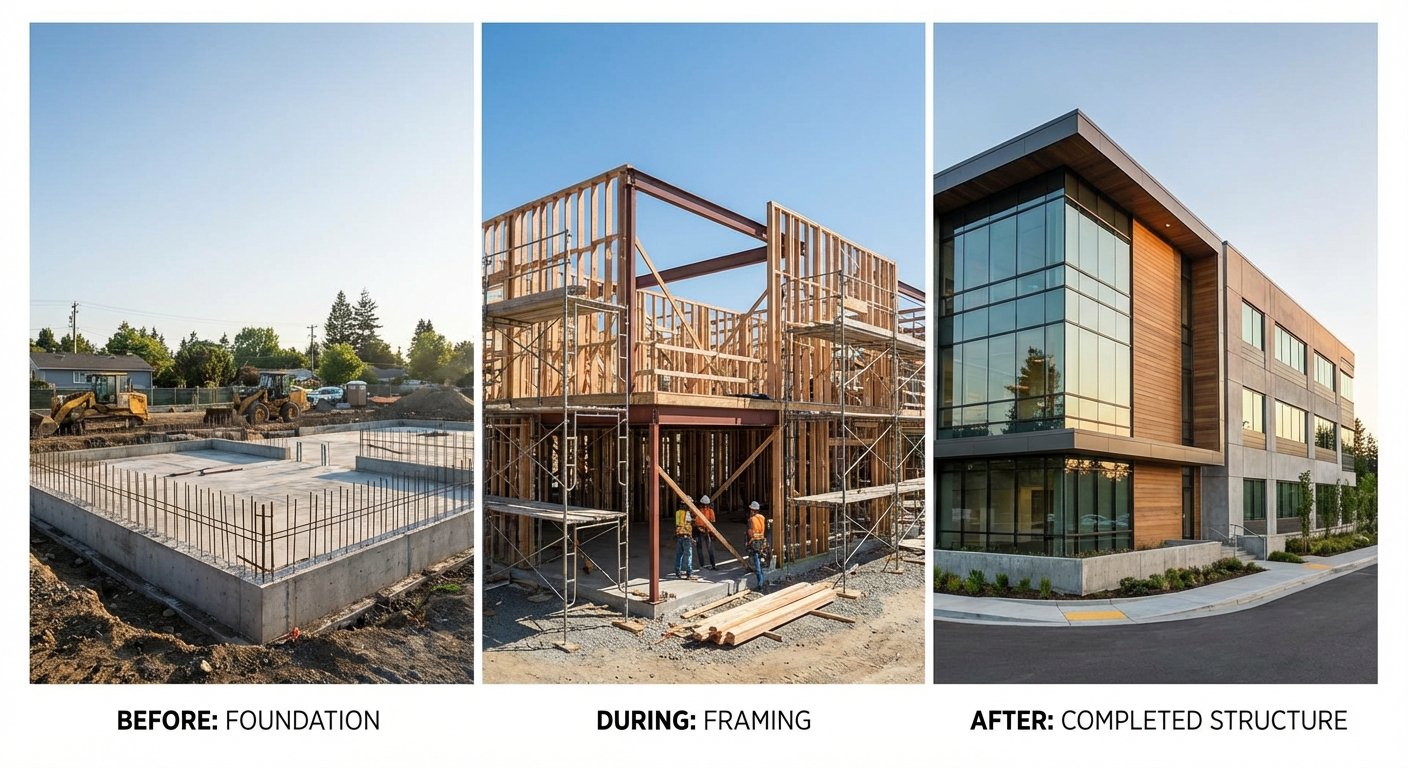
Successful real estate development is not linear—but it is methodical. While phases often overlap for efficiency, experienced developers understand that each stage serves a distinct purpose: reducing risk, validating feasibility, and protecting project economics.
Below is a high-level overview of the architectural project development process as we apply it to multifamily and mixed-use projects throughout California.
Pre-Design is where projects are either set up for success or quietly fail later.
This phase focuses on:
For developers, Pre-Design is less about drawings and more about answering one question early:
Does this site support the yield and economics required to proceed?
A disciplined Pre-Design phase prevents over-design, entitlement surprises, and unnecessary sunk costs.
Schematic Design translates feasibility into a buildable concept.
Key outcomes include:
This is typically the phase where entitlement strategy is locked in. Advancing too far before entitlements are resolved can create redesign risk and unnecessary fees—especially on discretionary or density-driven projects.
Design Development is where the project becomes real enough to price accurately.
During this phase:
This is also the optimal time to engage a General Contractor for pre-construction services, allowing pricing, logistics, and sequencing to inform final design decisions.
Construction Documents translate intent into fully coordinated, permit-ready drawings.
This phase includes:
Permitting often begins before documents are 100% complete, allowing review and documentation to progress in parallel and reduce overall timelines.
Once documents are complete:
Well-documented drawings and disciplined review cycles are critical to obtaining accurate bids and predictable construction outcomes.
Construction Administration ensures the project is built as intended.
The architect’s role includes:
This phase protects the owner by ensuring quality, compliance, and clear communication between all parties.
Project close-out includes:
Post-occupancy services may include performance reviews, warranty coordination, and system optimization—ensuring the building operates as intended beyond construction.
For developers, architectural process is not academic—it is risk management.
A well-run project:
At ArchiDev Studio, our role extends beyond producing drawings—we help developers navigate complexity, protect yield, and execute projects with clarity.