
Project Development: How Developers Move from Vision to Entitlement to Construction
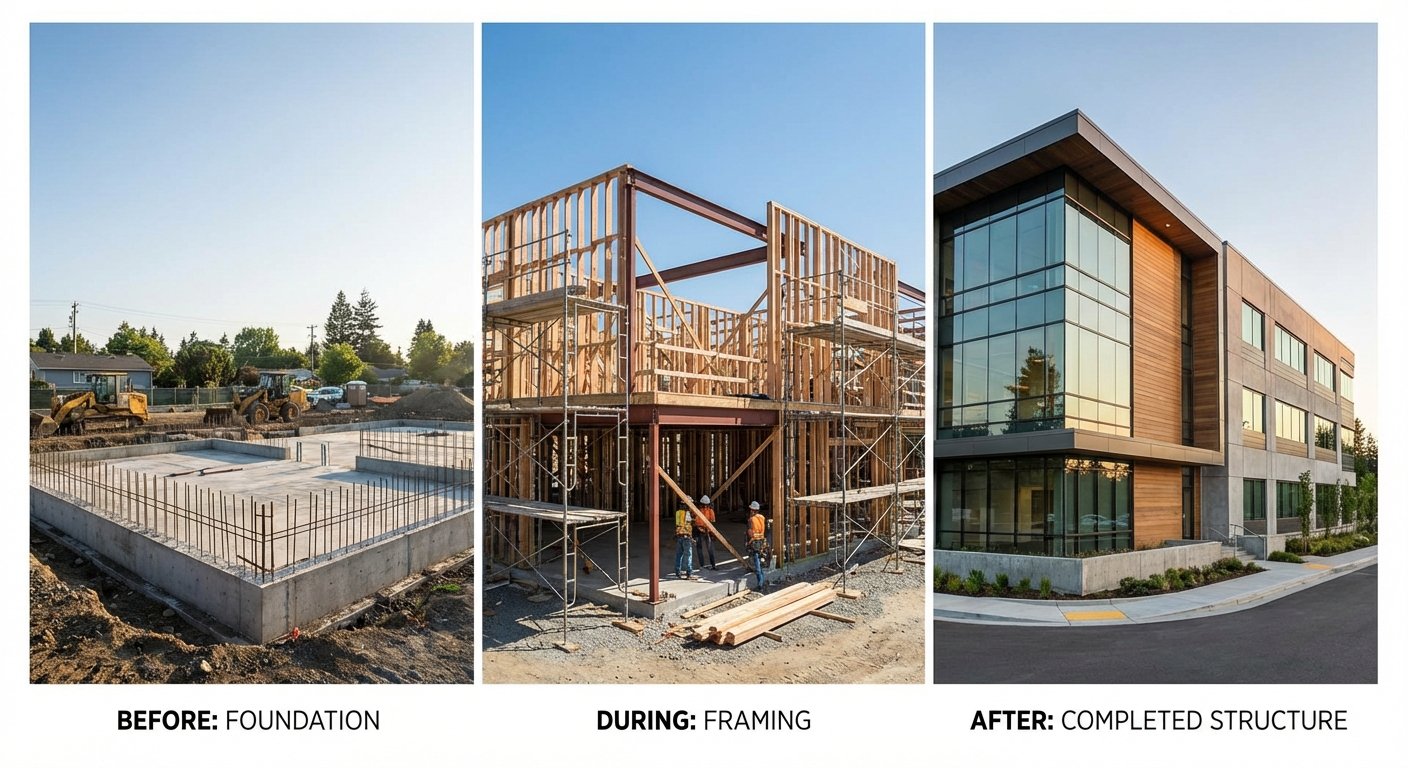
Successful real estate development is not linear—but it is methodical. While phases often overlap for efficiency, experienced developers understand that each stage serves a distinct purpose: reducing risk, validating feasibility, and protecting project economics.
Below is a high-level overview of the architectural project development process as we apply it to multifamily and mixed-use projects throughout California.
1. Pre-Design: Feasibility Before Form
Pre-Design is where projects are either set up for success or quietly fail later.
This phase focuses on:
- Site and zoning analysis (including overlays, constraints, and entitlement pathways)
- Feasibility and density studies
- Preliminary massing and yield validation
- Budget and schedule alignment
- Early agency and stakeholder coordination
For developers, Pre-Design is less about drawings and more about answering one question early:
Does this site support the yield and economics required to proceed?
A disciplined Pre-Design phase prevents over-design, entitlement surprises, and unnecessary sunk costs.
2. Schematic Design: Converting Yield into a Real Project
Schematic Design translates feasibility into a buildable concept.
Key outcomes include:
- Test-fit plans and massing diagrams
- Preliminary unit layouts and circulation
- Early code and fire-access validation
- Initial cost modeling tied to real geometry
- Optional early meetings with planning staff
This is typically the phase where entitlement strategy is locked in. Advancing too far before entitlements are resolved can create redesign risk and unnecessary fees—especially on discretionary or density-driven projects.
3. Design Development: Coordination, Compliance, and Cost Control
Design Development is where the project becomes real enough to price accurately.
During this phase:
- Architectural drawings are refined and coordinated
- Structural, MEP, Title-24, and specialty consultants are integrated
- Materials and systems are selected with cost and constructability in mind
- Code compliance is fully validated
- A more reliable cost estimate is produced
This is also the optimal time to engage a General Contractor for pre-construction services, allowing pricing, logistics, and sequencing to inform final design decisions.
4. Construction Documents: From Design to Permit-Ready
Construction Documents translate intent into fully coordinated, permit-ready drawings.
This phase includes:
- Detailed architectural, structural, and MEP plans
- Specifications defining quality, performance, and installation standards
- Energy compliance documentation
- Internal QA/QC coordination to minimize field changes
- Plan check submittals and agency review
Permitting often begins before documents are 100% complete, allowing review and documentation to progress in parallel and reduce overall timelines.
5. Bidding & Negotiation: Aligning Scope, Price, and Risk
Once documents are complete:
- Contractors are invited to bid or submit proposals
- Bids are evaluated for scope, experience, and pricing—not just cost
- Clarifications, value engineering, and negotiations occur as needed
- Contracts are finalized with clearly defined responsibilities and deliverables
Well-documented drawings and disciplined review cycles are critical to obtaining accurate bids and predictable construction outcomes.
6. Construction Administration: Protecting the Project in the Field
Construction Administration ensures the project is built as intended.
The architect’s role includes:
- Reviewing RFIs, submittals, and change orders
- Verifying pay applications and lien releases
- Conducting site observations and OAC meetings
- Issuing supplemental instructions when required
- Certifying Substantial and Final Completion
This phase protects the owner by ensuring quality, compliance, and clear communication between all parties.
7. Close-Out & Post-Occupancy: Completing the Lifecycle
Project close-out includes:
- Final inspections and approvals
- Punch-list resolution
- Delivery of record drawings, warranties, and manuals
- Transition to occupancy and operations
Post-occupancy services may include performance reviews, warranty coordination, and system optimization—ensuring the building operates as intended beyond construction.
Why Process Discipline Matters
For developers, architectural process is not academic—it is risk management.
A well-run project:
- Preserves entitlement value
- Controls construction cost escalation
- Minimizes redesign and delay
- Supports financing and investor confidence
At ArchiDev Studio, our role extends beyond producing drawings—we help developers navigate complexity, protect yield, and execute projects with clarity.