

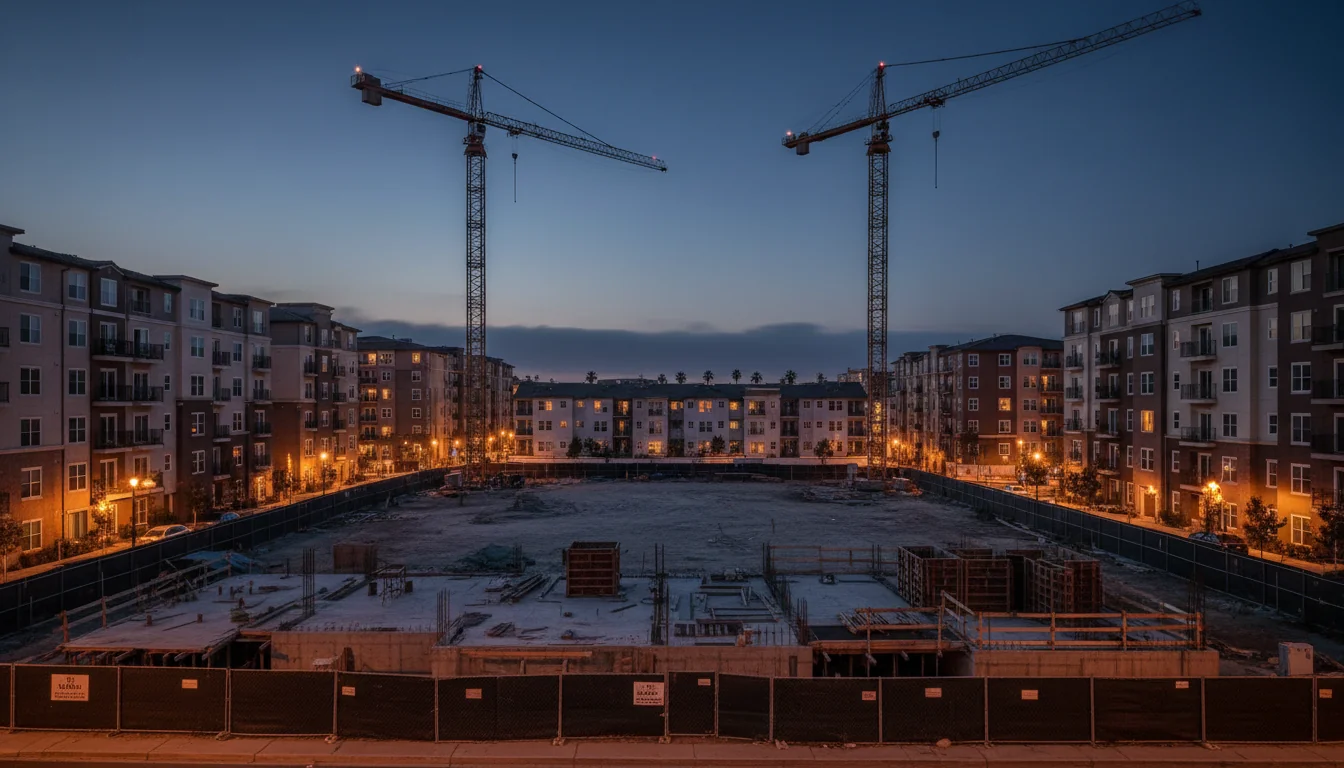
San Diego Doesn’t Have a Zoning Problem — It Has a Feasibility Problem
Introduction
For years, the housing conversation in California has centered on zoning.
Increase density. Expand capacity. Remove barriers.
And to a large extent, that work has been done.
In San Diego, programs like Complete Communities Housing Solutions (CCHS) have created capacity that exceeds state housing requirements.
The Capacity Is Already There
Based on current planning frameworks:
- San Diego has significant baseline zoning capacity
- CCHS overlays increase that capacity even further
- In many cases, allowable density already exceeds what state mandates require
This means the issue is not theoretical buildout.
It is actual delivery.
The Real Constraint: Feasibility
Development is not driven by zoning alone.
And today, several factors are making that difficult:
Each of these introduces friction.
Together, they determine whether a project moves forward—or stalls.
Policy Has Focused on the Wrong Problem
Recent legislation has made meaningful progress:
- SB 79 improves entitlement pathways
- SB 330 provides timing and certainty
- The 2026 Land Development Code Update adjusts regulations
But these changes primarily address process.
They do not fully address cost.
The Shift We Need
If the goal is to increase housing production, the focus must shift from capacity to feasibility.
This means addressing:
- cost of construction
- insurance structures
- fee burdens
- financing gaps
Without these changes, increased zoning capacity alone will not translate into delivered units.
The Missing Middle Challenge
One of the clearest examples of this issue is the “missing middle.”
Today’s housing market resembles an hourglass:
This is where policy can have the greatest impact moving forward.
San Diego’s Opportunity
San Diego is well positioned to lead this next phase.
The City has already:
- expanded zoning capacity
- introduced density programs
- begun updating its development code
The next step is aligning financial feasibility with these policies.
Strategic Takeaway
The question is no longer:
“Can we build here?rdquo;
It is:
“Can we make it work financially?rdquo;
Conclusion
Zoning reform was the first step.
Final Thought
If projects don’t pencil, they don’t get built.
That is the reality shaping housing delivery today.
Closing
What are you seeing in your projects—are they being limited by zoning, or by feasibility?
This content is provided for general informational purposes only and does not constitute legal, financial, or entitlement advice. Housing legislation, local policy implementation, and project feasibility are subject to change and vary based on site conditions, jurisdiction, and agency interpretation. Project feasibility must be evaluated on a site-specific basis in coordination with qualified professionals and the appropriate public agencies.